Stromatolites, the earliest fossils.
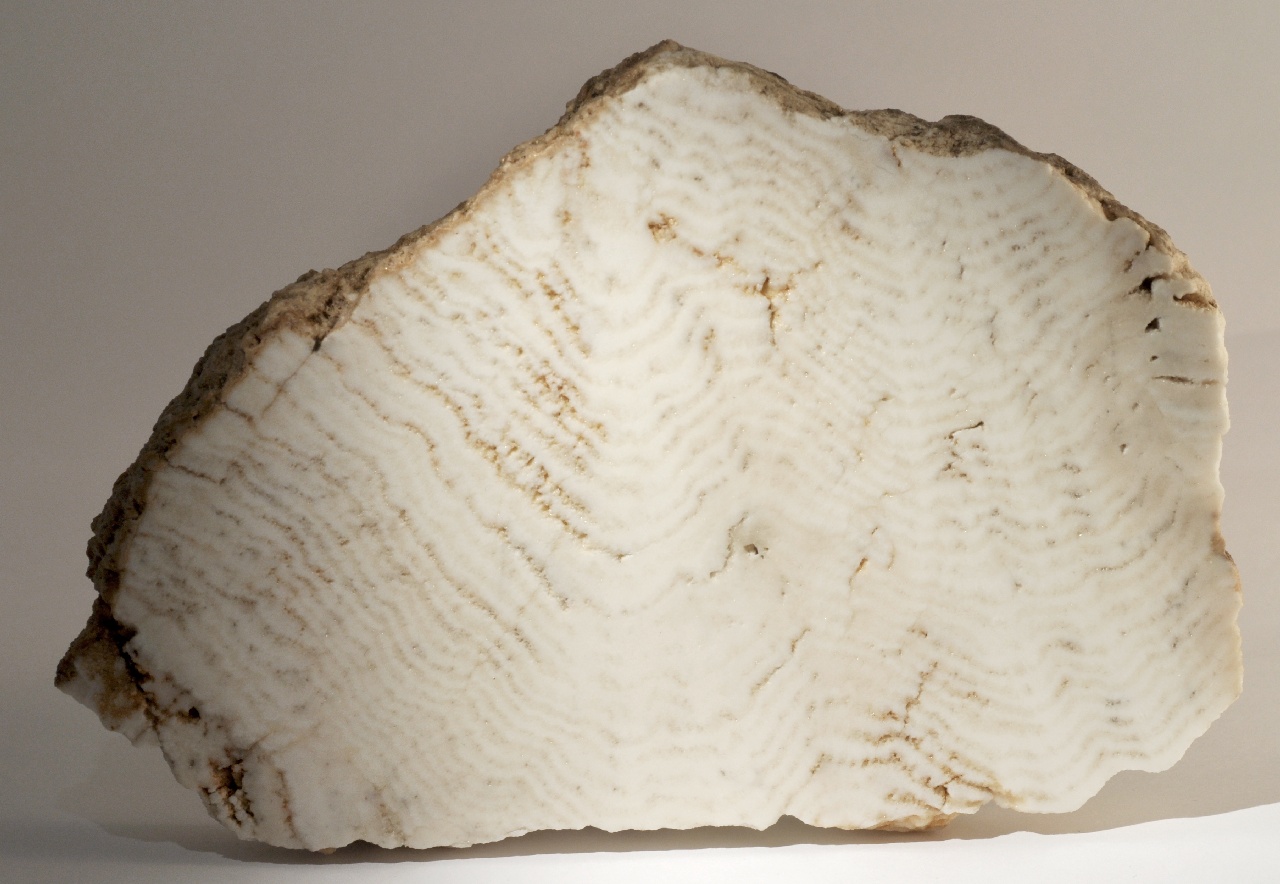
So what's a stromatolite? They are still being produced today, and are the
result of mineral building underwater bacterial colonies like this example. As the bacteria live, they put down a
thin layer of mineral behind them. Eventually this mineral layer becomes thick enough to see, and continues
to get larger and larger. They can become as large as a house. This example is only 340 million years old, and
is from Wyoming, and is included to show what an undamaged stromatolite looks like inside.
This is one of the oldest examples of early life visible to the eye, a stromaolite
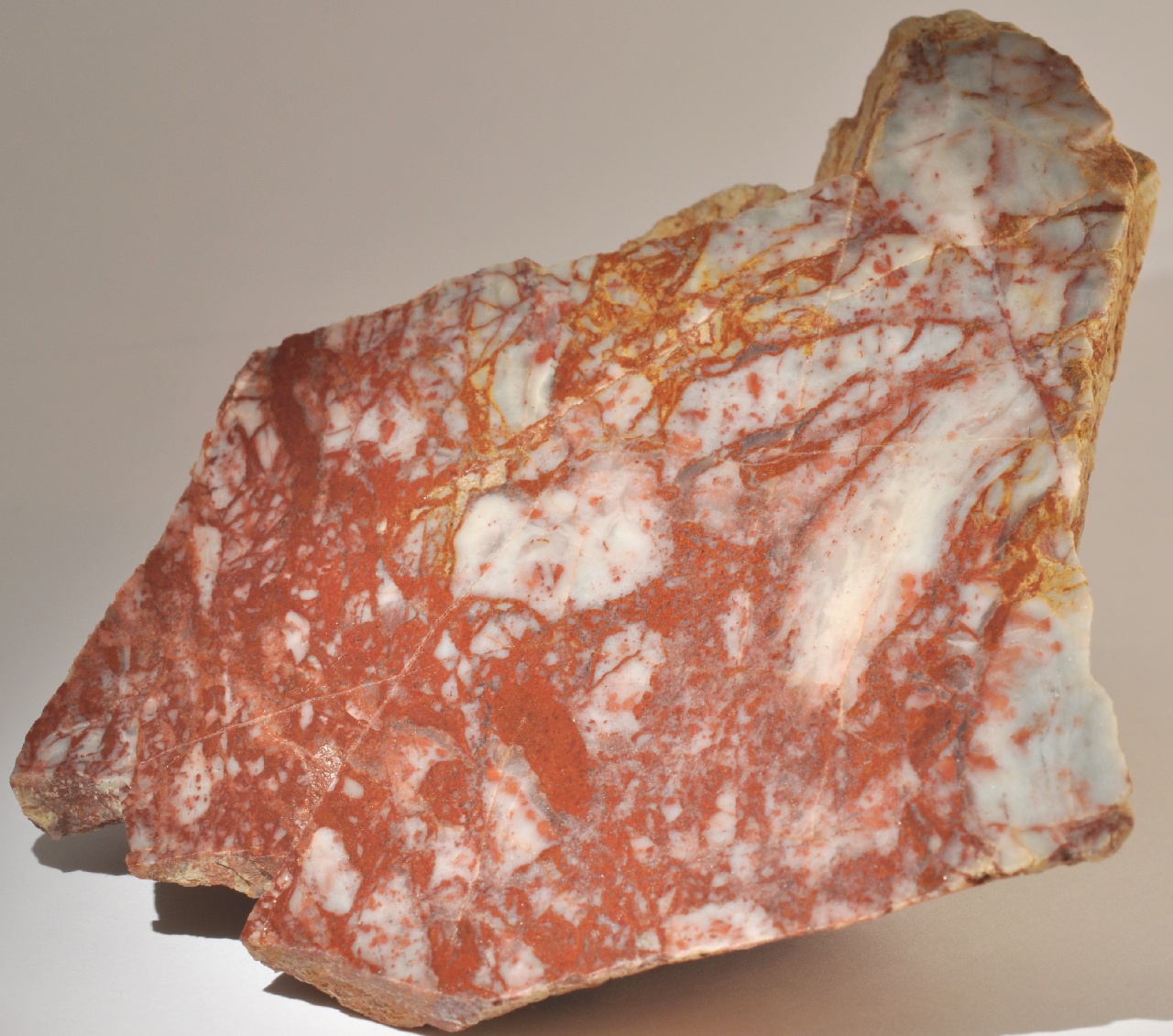
from Medicine Bow Mountains, Wyoming, dating to 2,580 million years ago. The stromatolite has been modified
over time by geological forces, and so it no longer has that pretty layered appearance of the sample above.
It is the white lobed-looking sections of this stone. The first bacteria appeared about 3,400 million years ago,
but they would be too small to see! The first nucleated cells didn't appear until about 1,800 million years ago.
Stromatolites begin to appear about 3,000 million years ago, and they changed the world for the better.
They are credited with producing the oxygen that is now in the atmosphere! Now notice the red colour in
this stromatolite. This is explained further in the next sample.
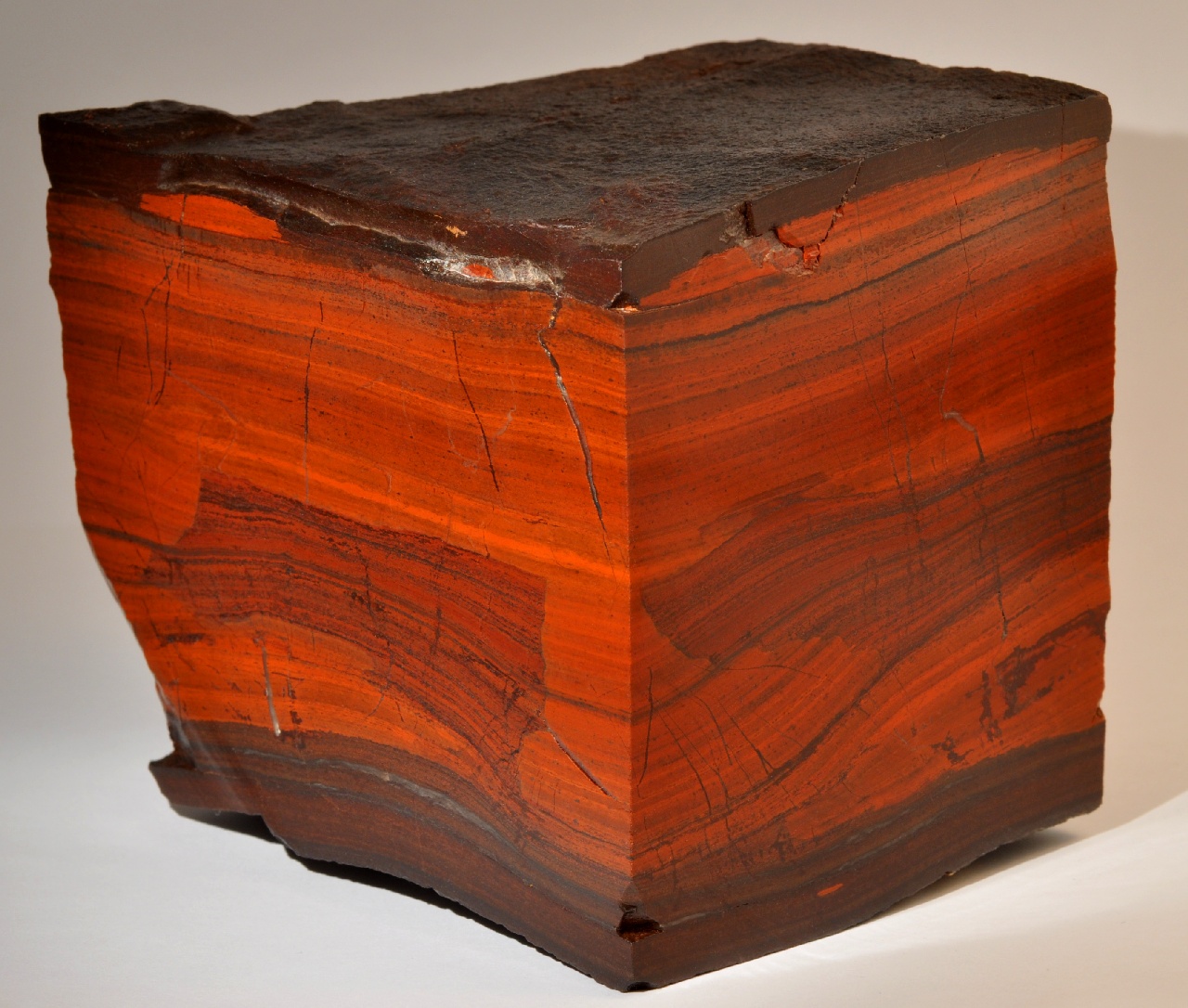
This is a sample of "Iron Banding", a global oceanic phenomenon of about 3,000 million years ago to about
2,000 million years ago. Prior to the stromatolites producing the free oxygen, the oceans contained a
high concentration of iron ions, which would be happy to remain in solution in the absence of oxygen.
So as the stromatolites generated the oxygen, it reacted with the iron ions forming iron oxide (better known as: rust!) which then precipitated and sank to the ocean floor
That explains the red deposits on the above stromatolite, as it lived during this time.
The stone below shows the many layers of rust as they settled to the ocean floor, and became compacted into
this rock, which dates to 2,730 million years ago. This sample is from Gogebic County, near Wakefield, Michigan.
Once the iron ions were all precipitated, the oxygen began to accumulate into the atmosphere, making the
development of more advanced visible life possible, but was not to happen until 540 million years ago.
back to hobby page.