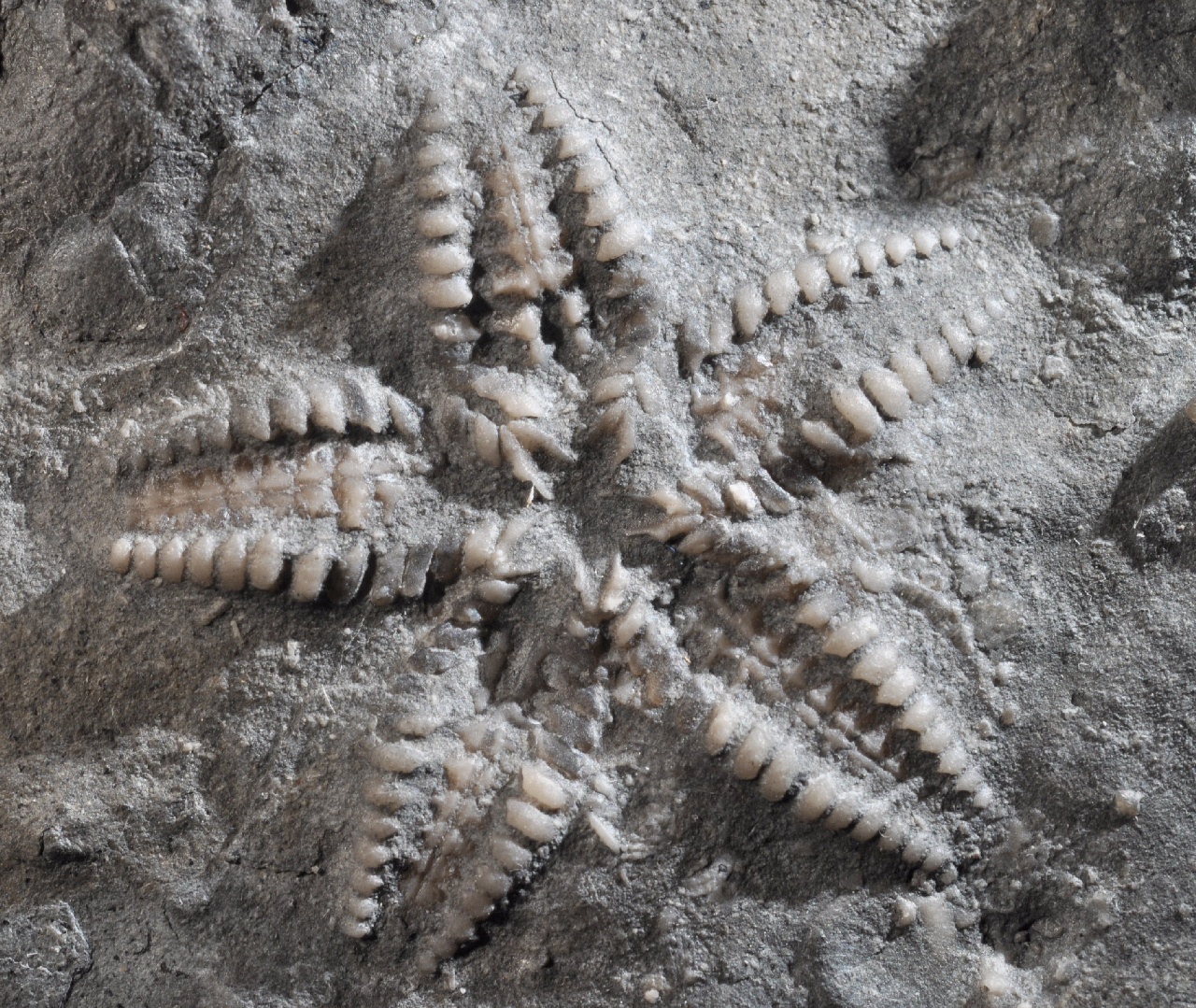
Stenaster salteri, a 470 million year old seastar fossil.
In honour of Yuko`s appreciation of seastars, we added this little 3cm seastar fossil that dates
from 470 million years ago! This age places it within 5 or 10 million years of the very earliest recognisable seastar fossils!
Seastar bodies typically fall apart after death, and do not fossilize well. It is uncommon to find a seastar fossil intact
and older than 100 million years. This is an exceptional little fossil from the Mid-Ordovician Period, during the Paleozoic Era.
Found in the Cardin Quarry, in Simcoe County, Ontario, Canada, in the `Bobcaygeon Formation` (pronounced bob-kay-jen).
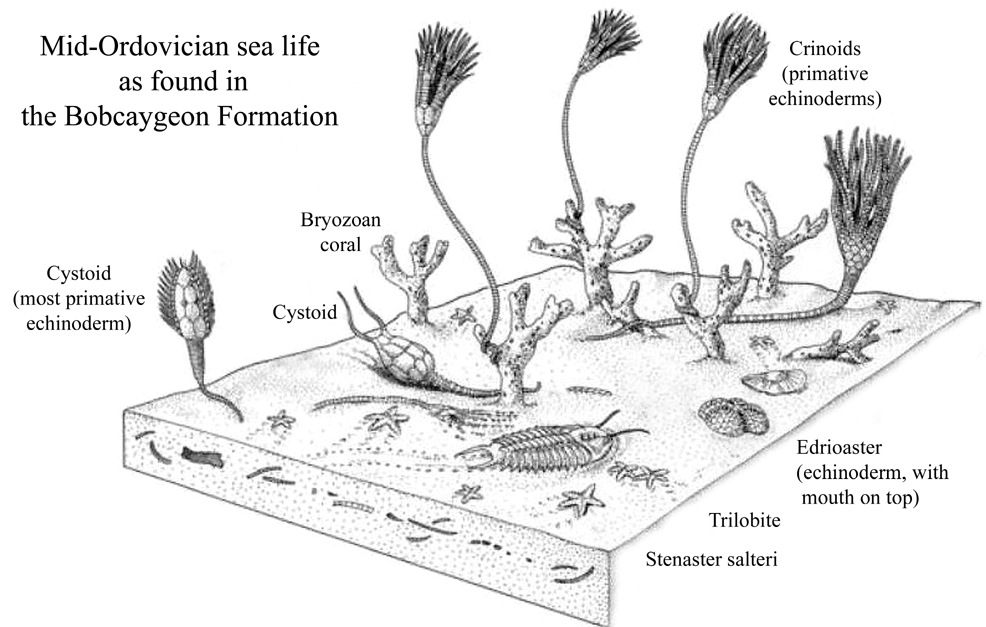
Seastars were the most advanced life-form of their day back then. Seastars are Echinoderms (spiny skin),
a group that also includes crinoids, cystoids, sea urchins, brittle stars, sand dollars, and sea cucumbers. Of these groups, the
cystoids became extint early on, the crinoids still survive today as the feather stars and basket stars, while the rest have thrived
to the present. In the Mid-Ordovician there were no predators yet, so most of the existing life-forms were still relatively defenseless.
This was well before the fish arrived, and dry land had only recently been colonized by early plants like mosses.
Modern surviving local relatives of the Seastars:
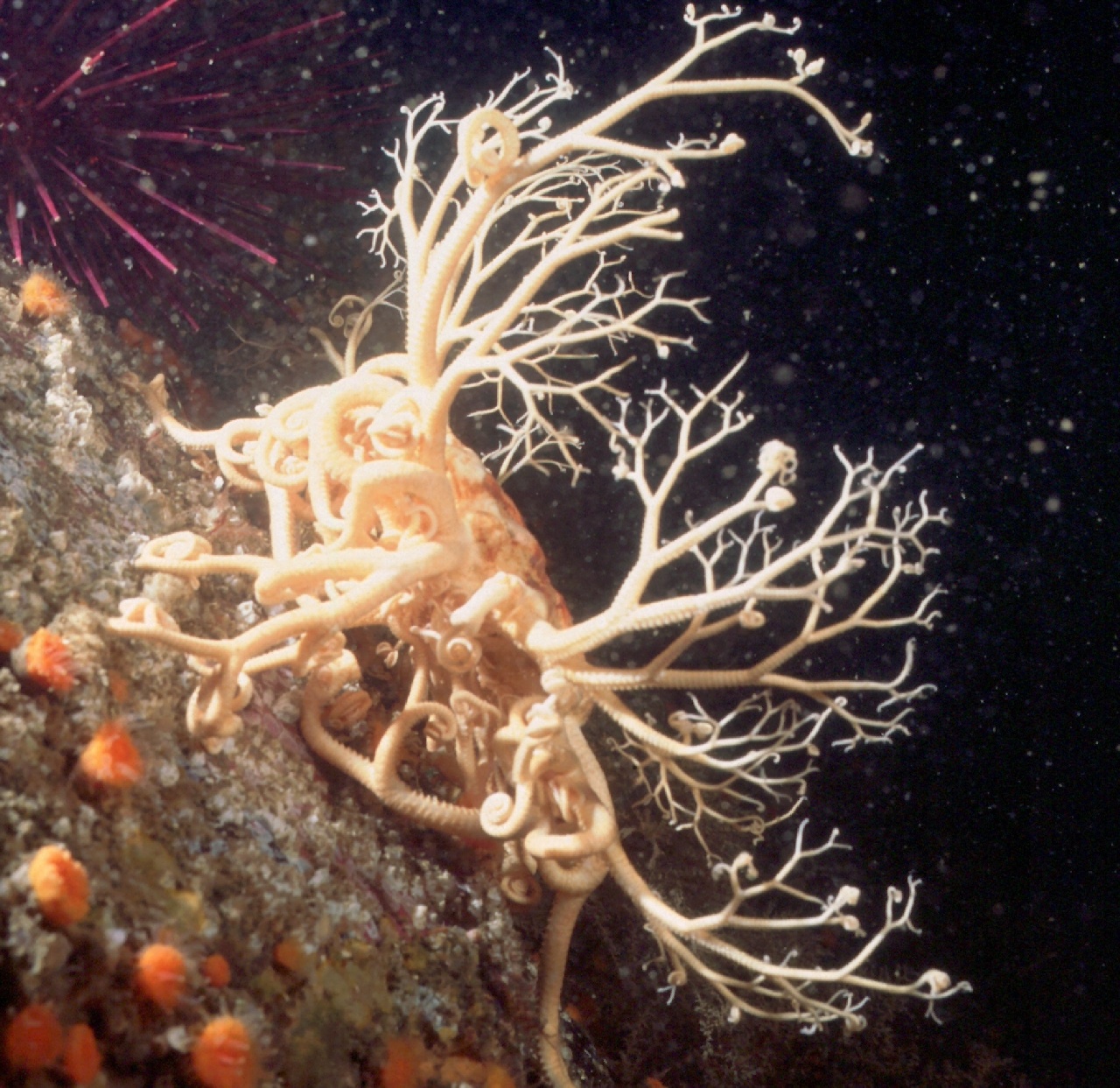
This is a Basket star, from the Gulf Islands near Nanaimo, BC, Canada. One of the surviving descendants of the crinoids.
They trap small food on their arms, and transfer it to their mouth, which is located in the middle of the upper side of the body.
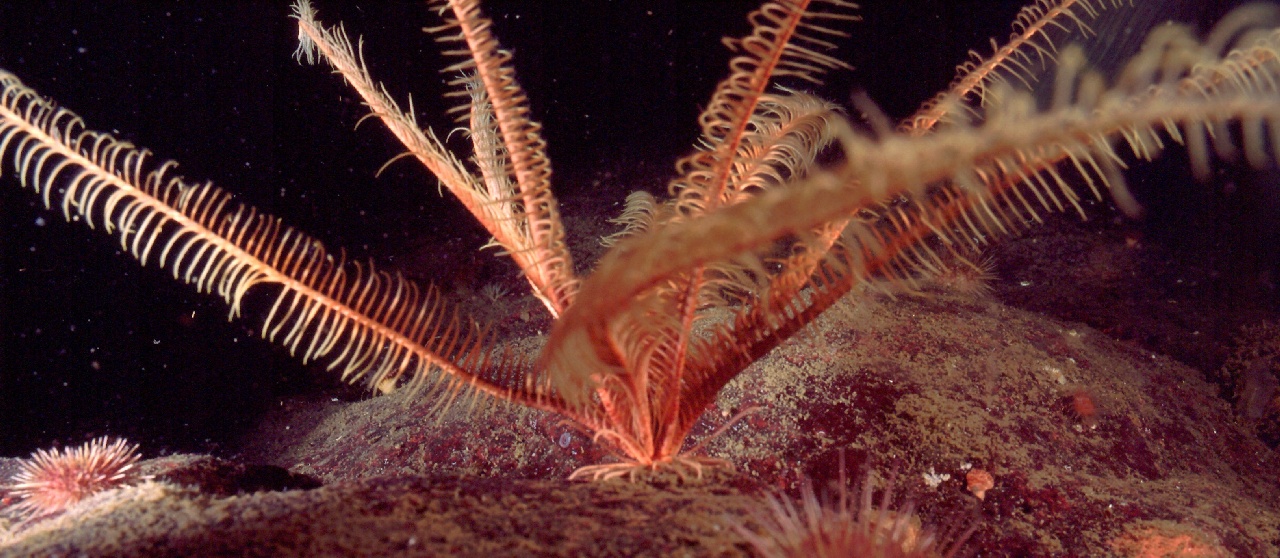
This is a Feather Star, from near Vancouver BC, The other form of the surviving descendants of the crinoids.
They trap small food on their arms, and transfer it to their mouth, which is located in the middle of the upper side of the body.
This is a White Sea Cucumber, from near Vancouver, BC. One of its arms is in its mouth being cleaned of trapped food.

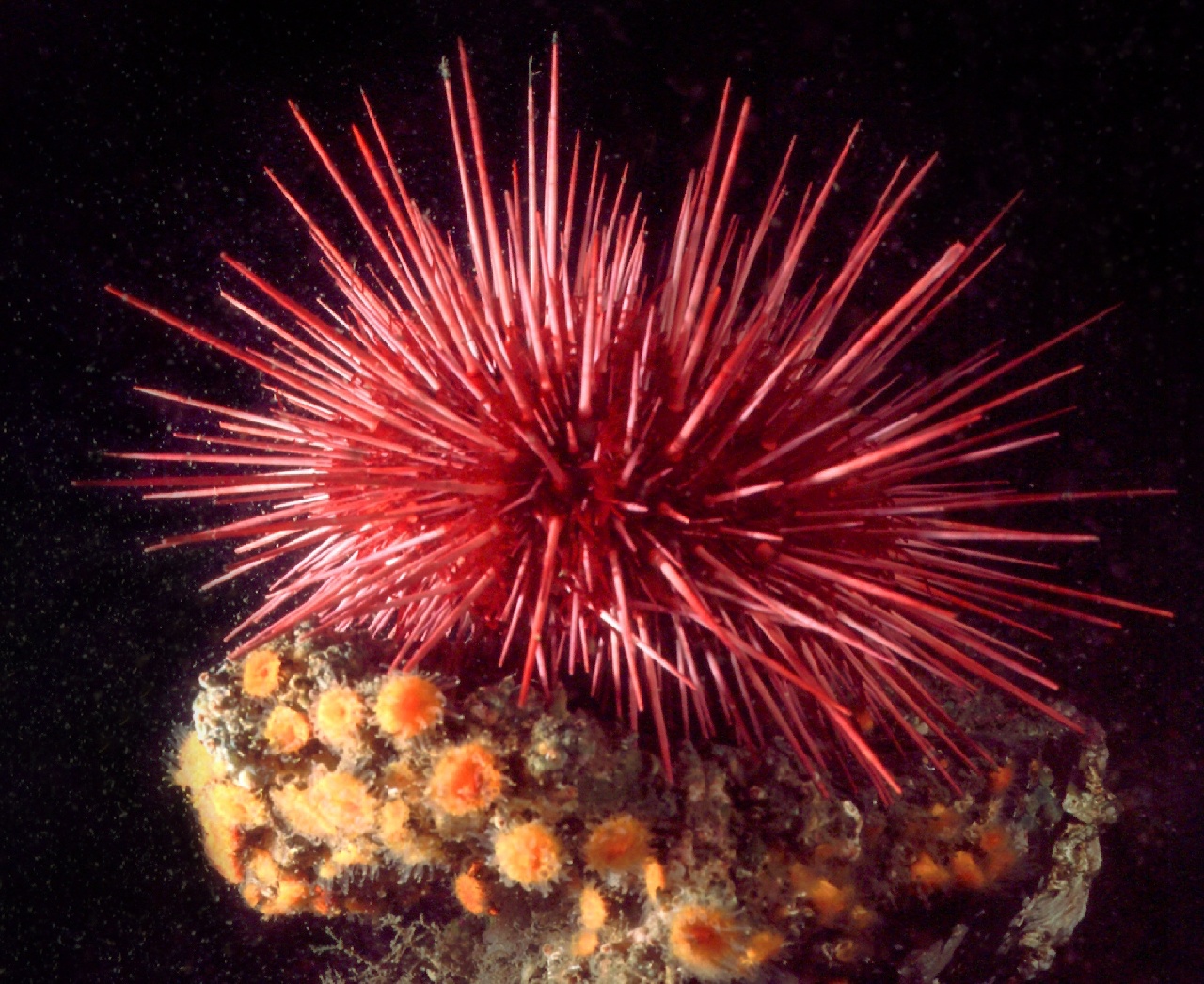
This Giant Red Sea Urchin, is from near Vancouver, BC. The apparent random spine placement of these algea eaters is not at all random...
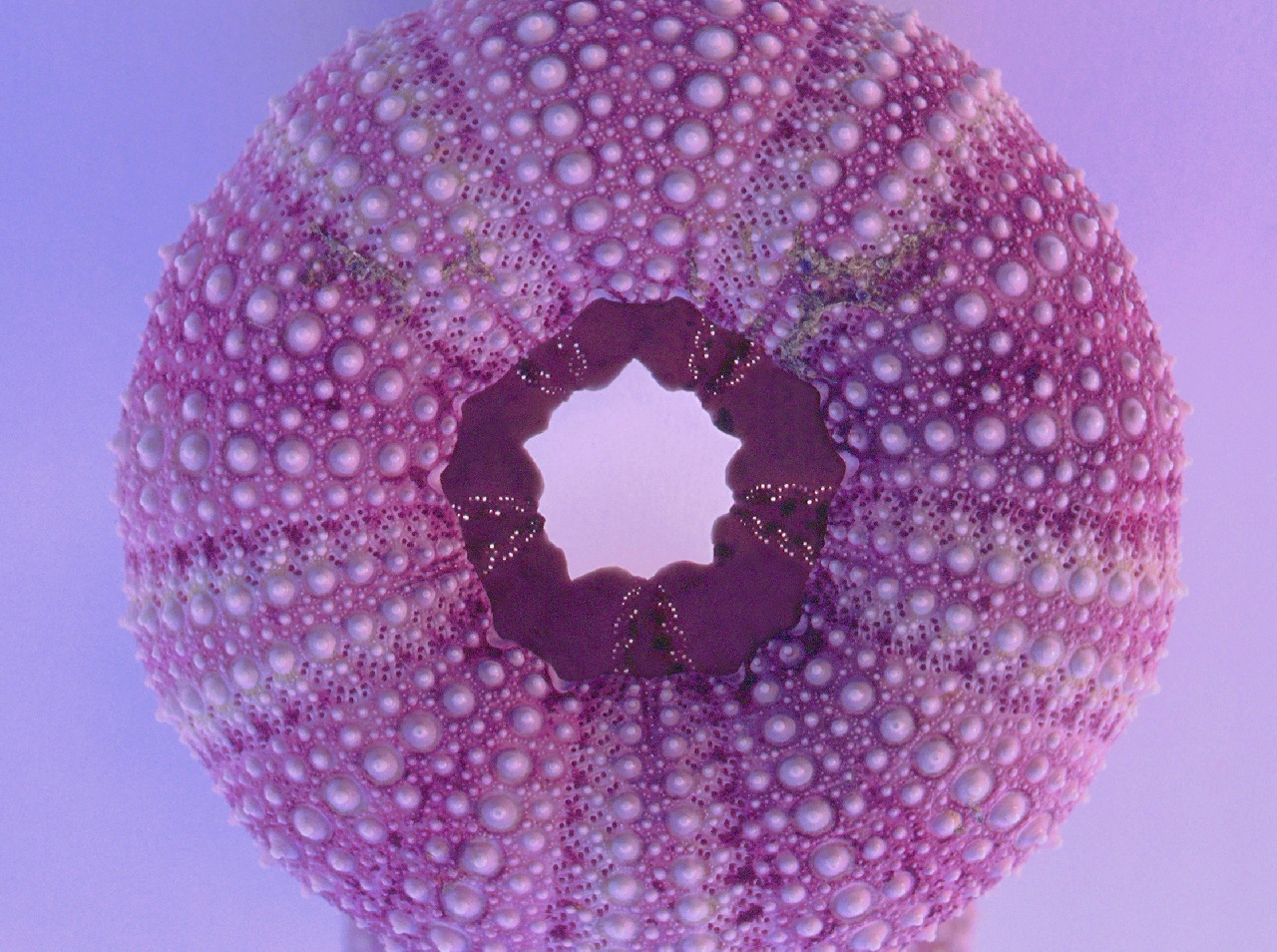
This a Sea Urchin "test", the skeleton remains. You can see the spine placement is quite orderly in a radial pattern.
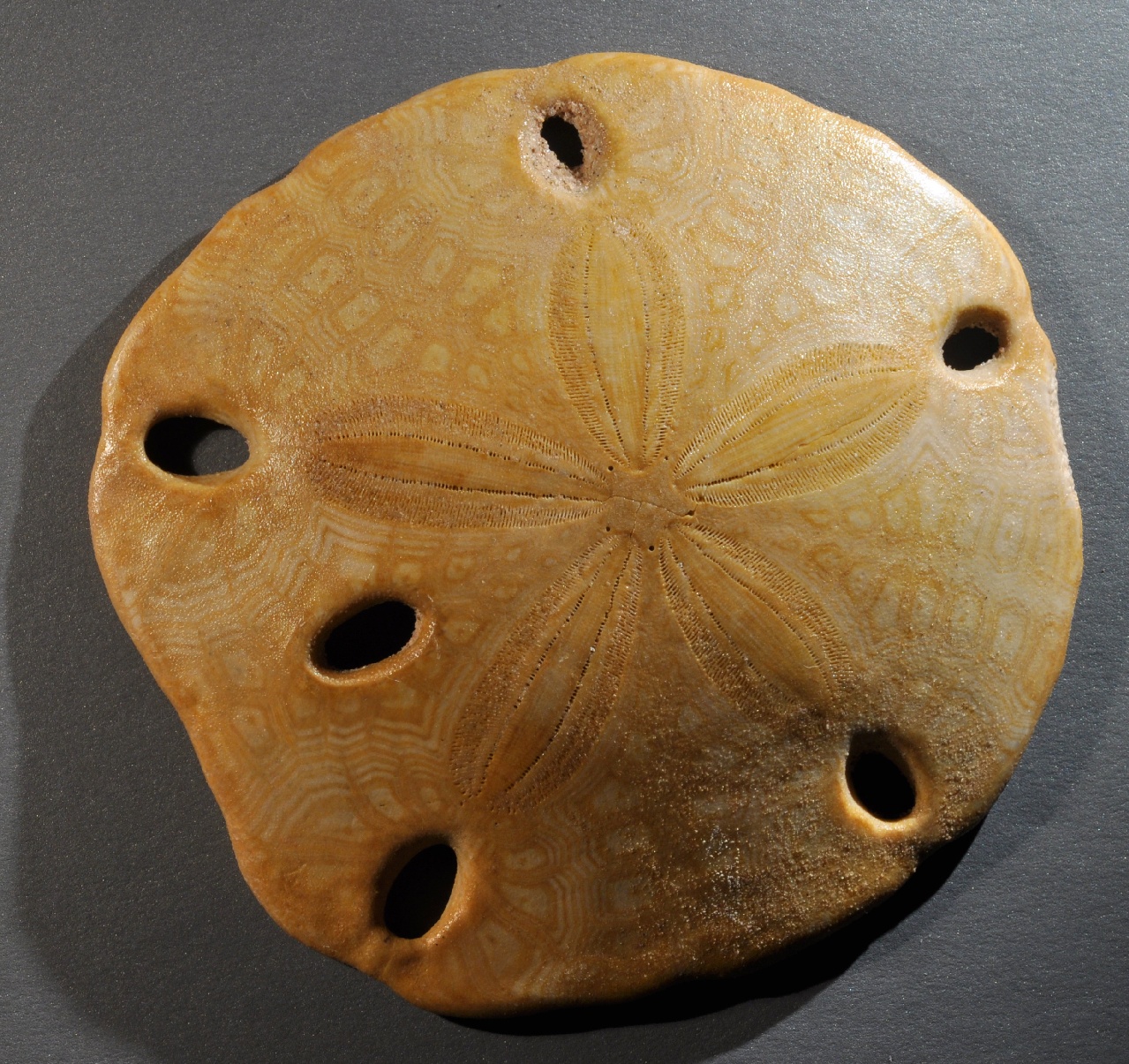
This a Sand Dollar fossil, 12 million years old, from Mexico. Again, the obvious orderly radial pattern.
back to hobby page.