Sand Tiger sharks
The modern Sand Tiger shark reaches about 10 ft in length and about 600 lb in weight.
The bar under each shark image indicates 4 ft in length.

About 65 million years ago, just as the dinosaurs were ending, this shark, Striatolamia, appears.
It still retains the cusplets, but there is a growing difference between the front teeth (right) and the side teeth (left).
Notice how the cusps are still big on the side teeth, but are reduced to a simple sharp point on the front teeth. And here are the striations
appearing again, and the back curving shape is beginning to re-appear. This tooth is actually from a later Striatolamia, a giant version
with much larger teeth! The small toothed Striatolamia disappear about 50 million years ago, and the large tooth Striatolamia disappeared
about 35 million years ago. These teeth date to 40 million years ago, from the Piney Point formation in Virginia.

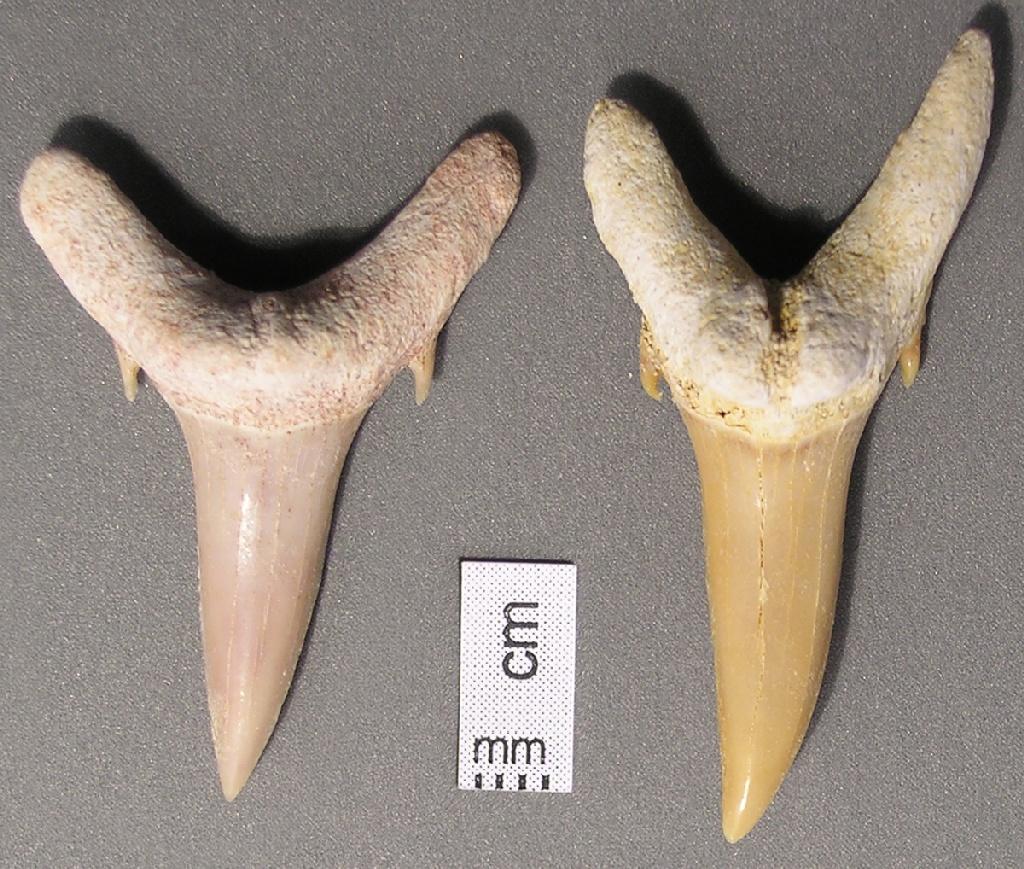
Descending from Striatolamia is Carcharias hopei, appearing about 60 million years ago and surviving
to at least 35 million years ago. Notice the front tooth (on the right) is now showing small barb-like cusplets, and the side tooth (left)
is looking very similar. These teeth date to about 55 million years ago, and are from Morocco.
Which brings us to the current end-result: the modern Sand Tiger shark. They appear about 29 million years ago,
but the cut-off dates become blurred as the teeth now look so similar to the prior shark. This is Carcharias taurus, and as you can see the
front and side tooth look quite identical, and both show small sharp cusplets and have the recurve shape.

This is a side view of the same teeth to show the curve in the teeth. The inside of the mouth is to the image left.
This tooth style is ideal for grabbing and holding a small fish, and then just swallowing it whole. They seem a refinement of the
original old shark`s teeth design. These are not teeth for biting out chunks of a victim...

back to main shark tooth page