Under the local waters.
the spiny symmetry of a sea urchin test. Cousins of the sea stars, you can see the 5 radial repeating sections.

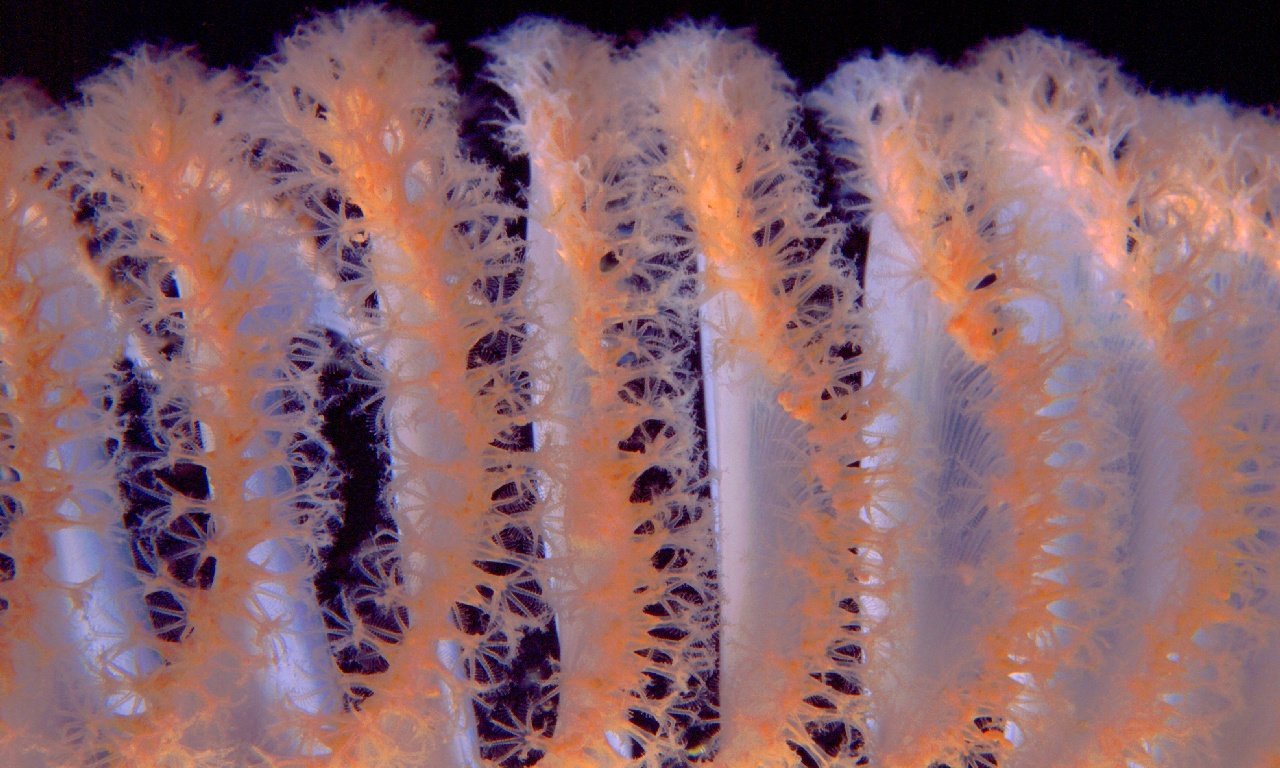
A close look at the many polyps that make up the organised feeding structures of a sea-pen.
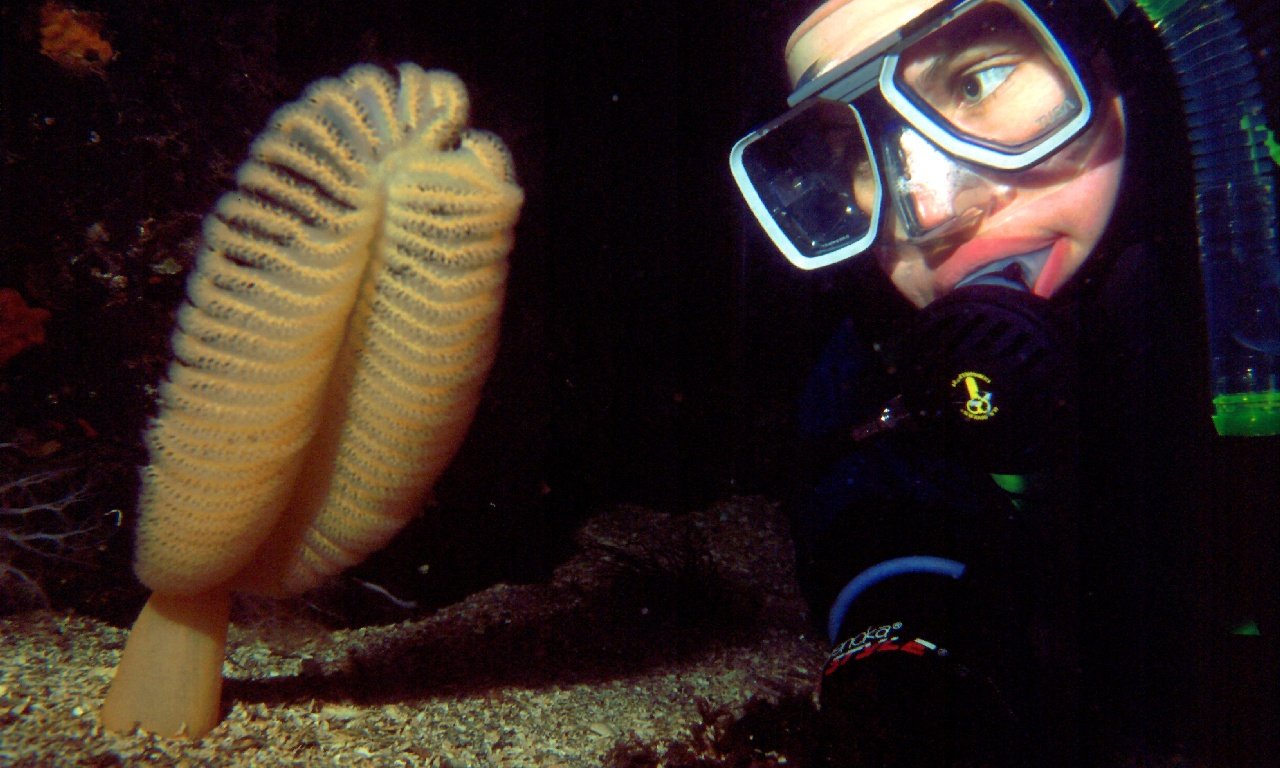
This is a sea pen and it has used water to pump itself up to this height.
When necessary, they pump out all the water inside and pull themselves down into the bottom matrix, literally dissappearing from view.
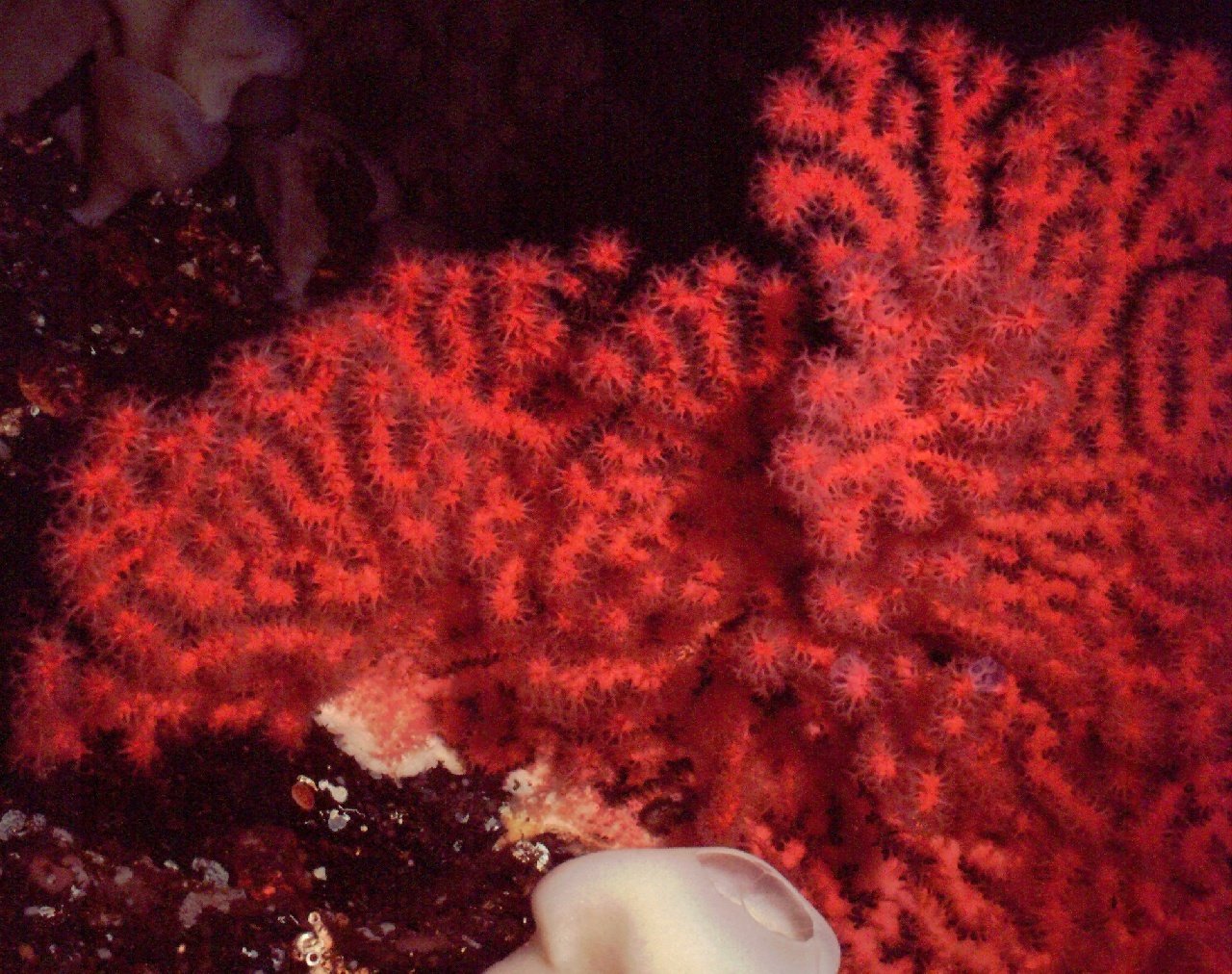
A local Gorgonian coral with the polyps all extended.
These grow at 180 ft down in 4 degree celsius water, nearly in the dark. Hard corals growing in BC?
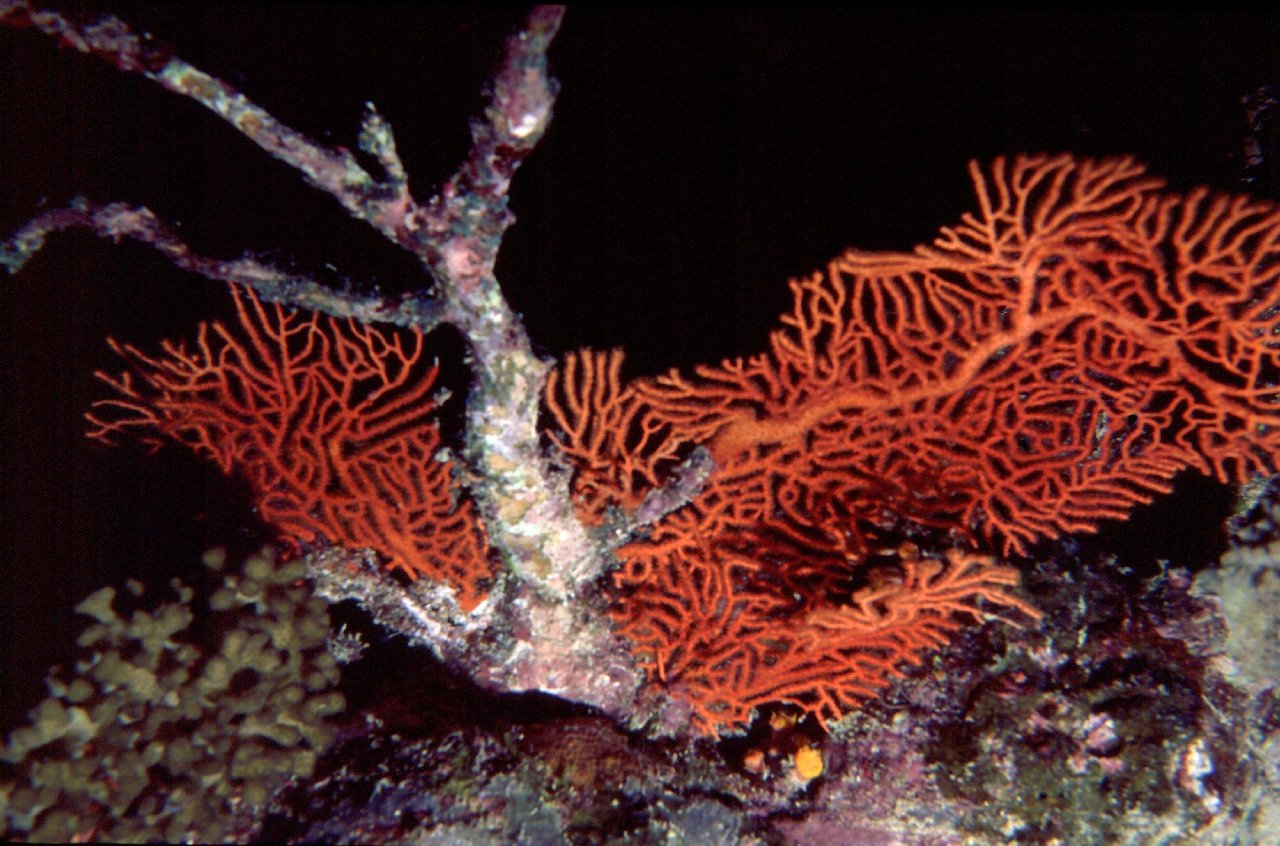
This is also a gorgonian coral, with the polyps retracted, and several branches stripped of life. Photographed in Australia, on the Great Barrier Reef at a depth of 20 ft,
in 22 degree celsius water, and in strong sunlight. Why is the same coral growing in such opposite environments. Notice that the cold BC coral looks healthier!
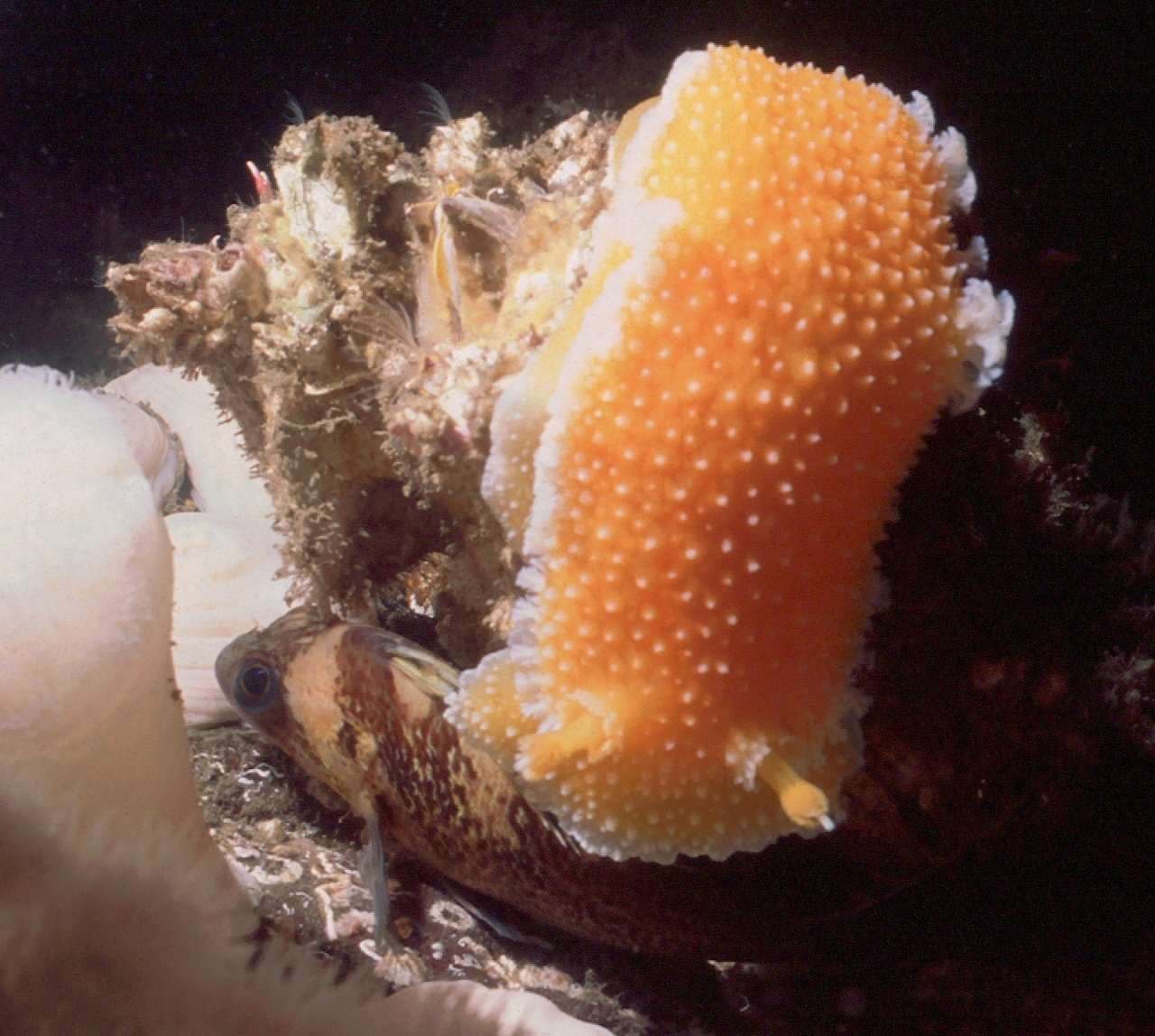
An Orange Peel nudibranch about to run into a juvenile quillback rockfish! The head is the end with the 2 rhinophores
on it (the stalks), and the white frill is its gills. About the size of a small loaf of bread, and very easy to spot! Nudibranchs are also called sea slugs, and
they taste terrible. They use their bright colours to help remind potential enemies!
A juvenile Giant Pacific Octopus, very small, very curious, and very vulnerable. Seals will sometimes follow divers at night,
and swoop in to catch the critters that are visible in our dive lights. We try to be careful... The black object in the upper right is part of a divers neoprene
mitten. The adults are just as curious, they really do try to interact with you. Since its favourite food is crab, you look for a pile of crab parts,
and the octopus lair will be nearby. This is usually the highlight of any dive.

To the next page