A last look around
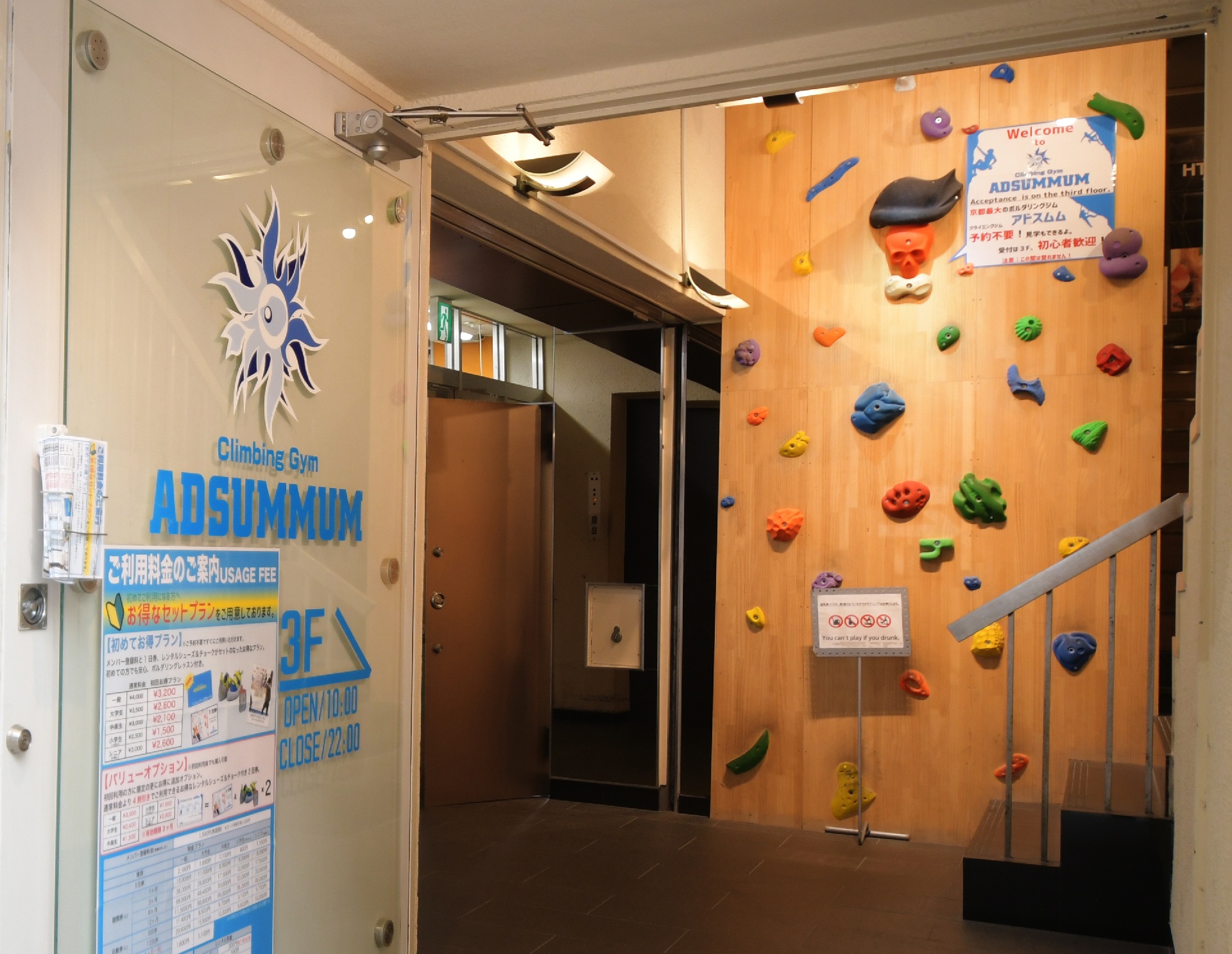
Oh look! A climbing wall location. It's on the 3rd floor. Guess how you get there!
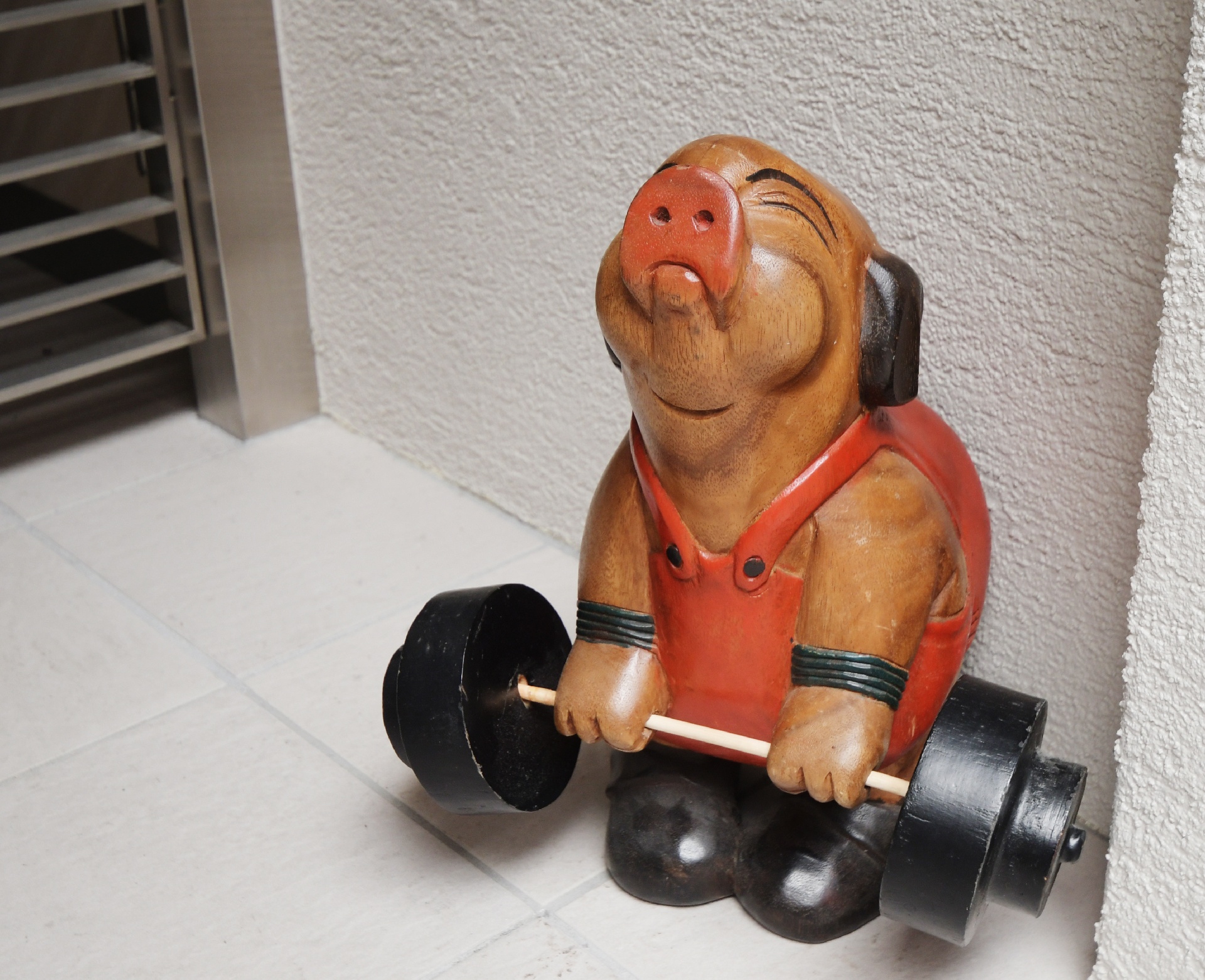
This old hog is surviving the years!
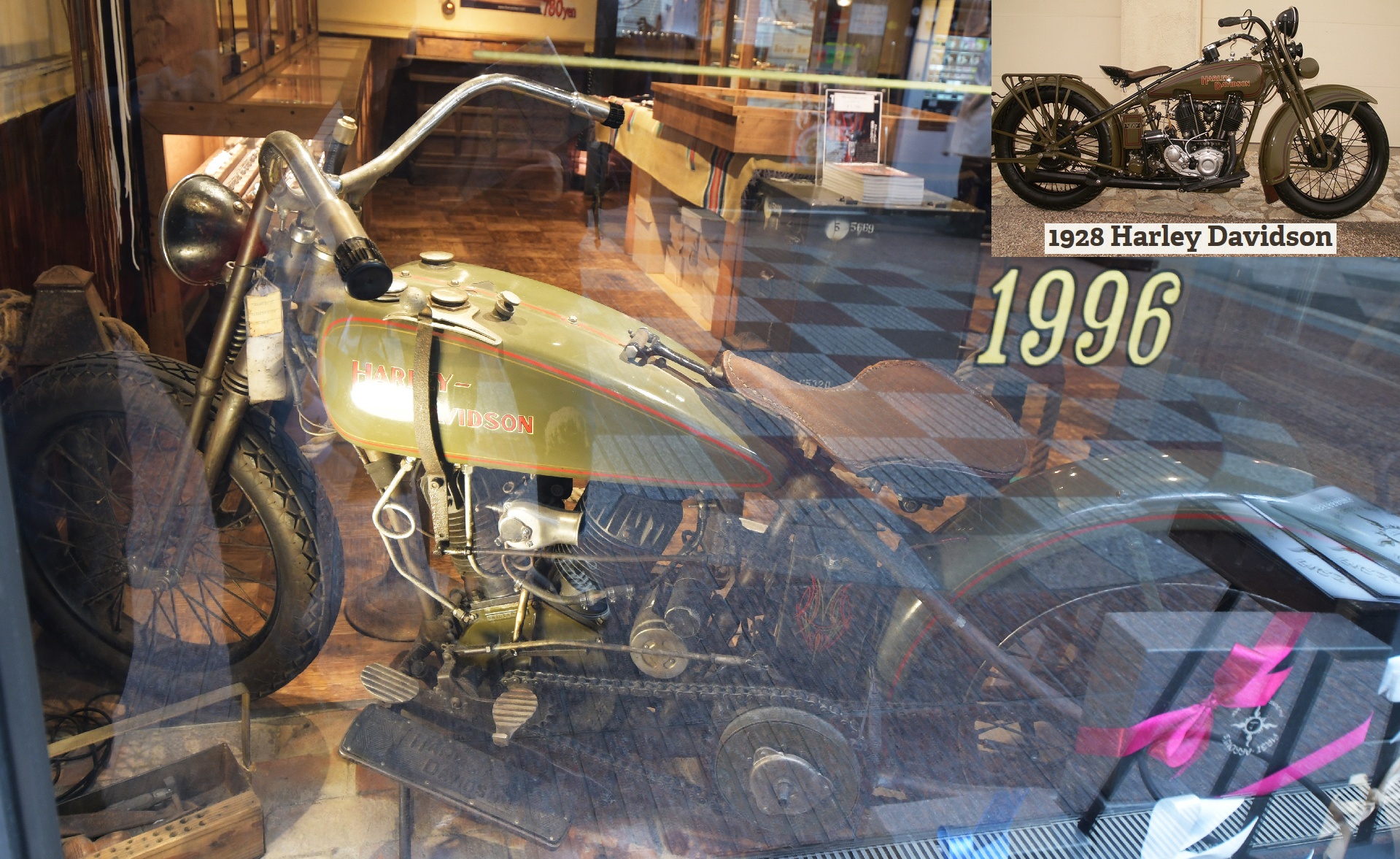
This old hog is also surviving the years! I added the 1928 inset. John and Marion weren't with us, so I couldn't point it out...
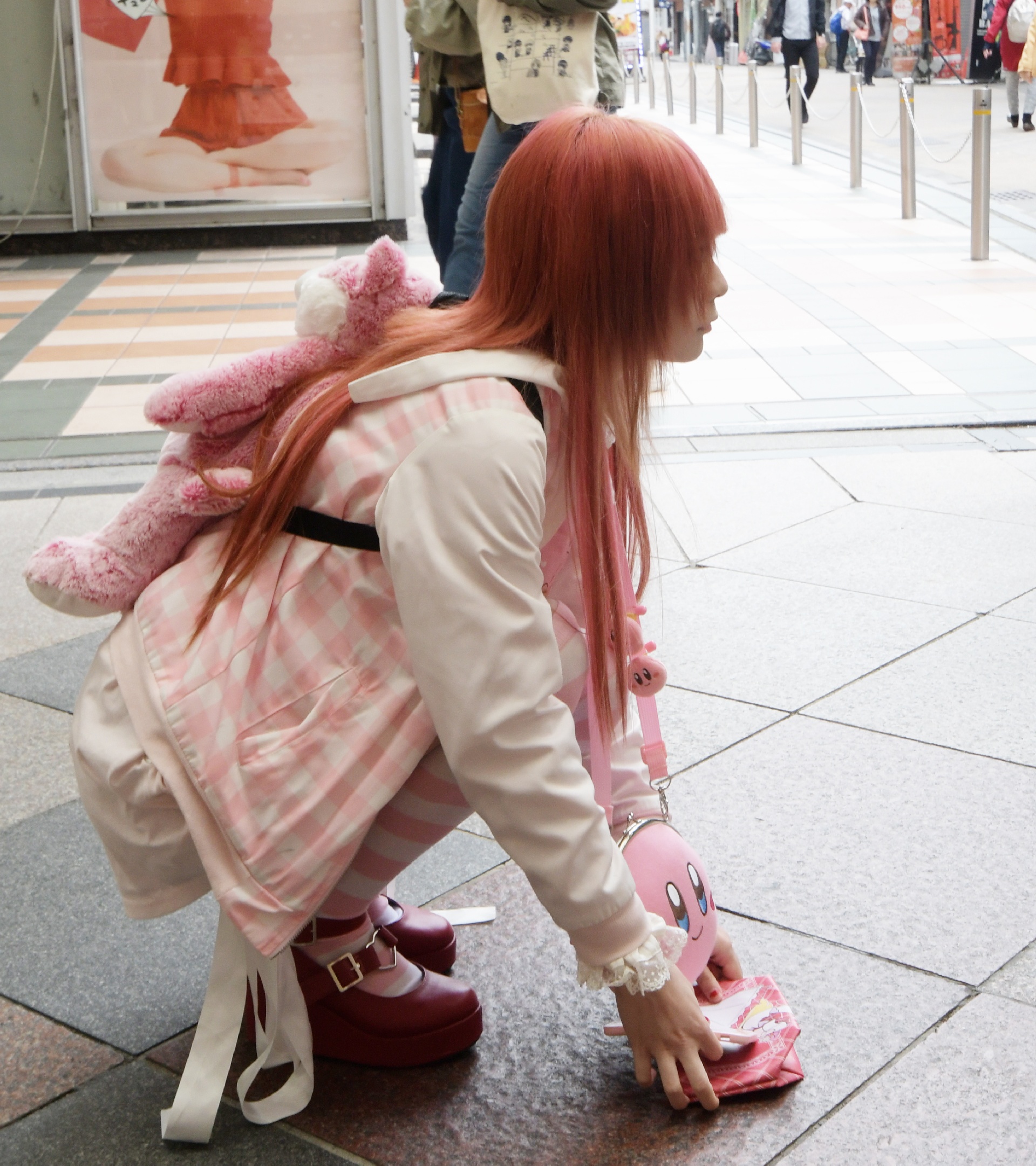
You don't see many of these dress-up girls in Kyoto. The whole pink theme must be more of a Tokyo thing.
While waiting for Yuko outside a shop, she went by and happened to drop something. I took the picture while holding the camera by my side, and just hoped it worked...
This brand name is unlikely to arrive in any English-speaking country. The whole presentation is suggestive, and it's likely that the name is no accident.
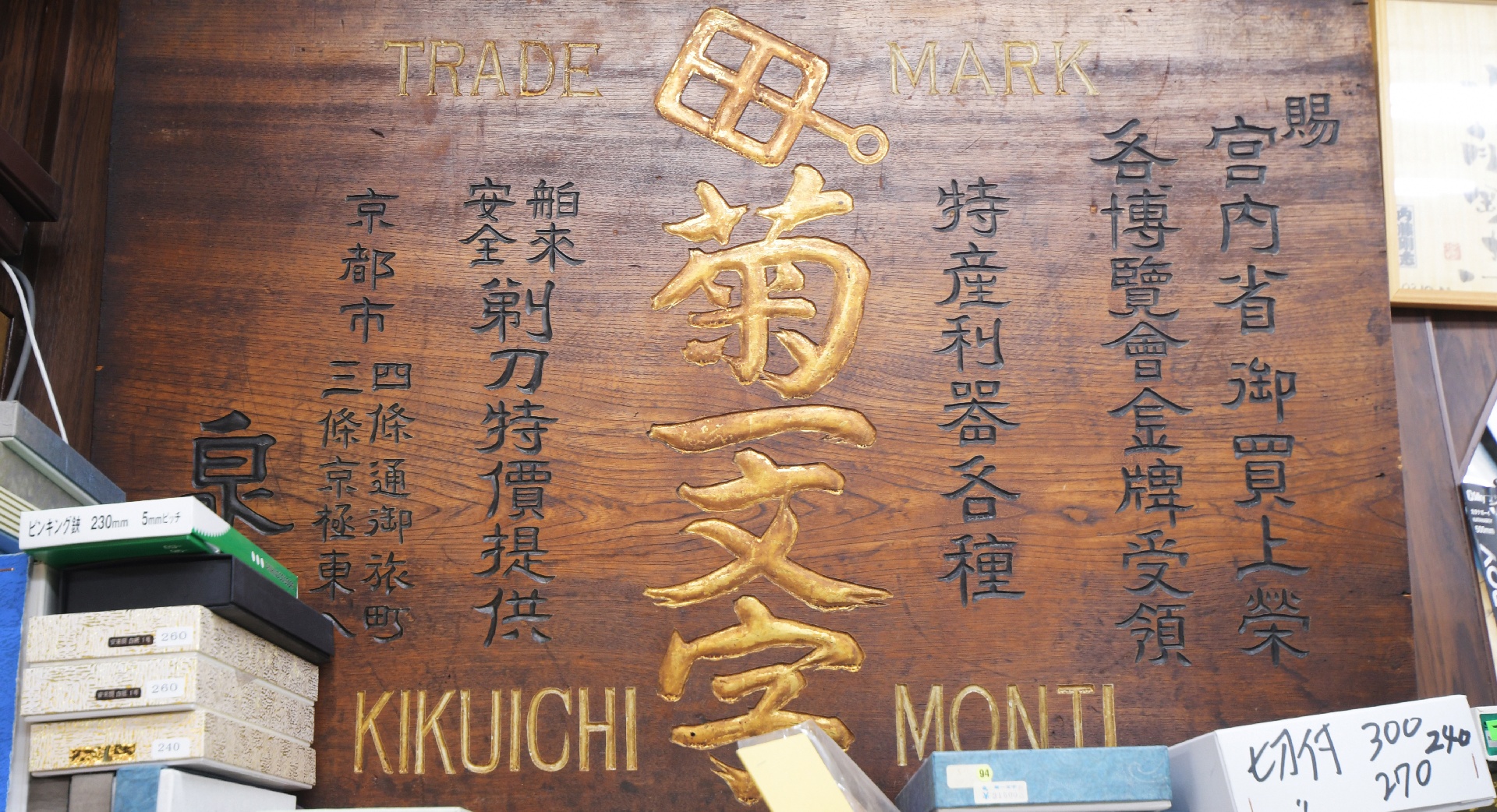
And we found another old knife shop... This sign prompted some digging once we got back to Vancouver.
Kikuichi monji is the name given the swords made by a collective of 13 master swordsmiths in 1208, who were commissioned by the Emperor.
Of the 13 swordsmiths, the first and foremost was named Norimune. This shop traces its origins back to Norimune. their website
The other 2 knife shops that we found (in Ise and Futami) use the kikuichi name as well, but they don't claim any specific connection to one of the old masters.
There is a 4th shop, in Nara, that claims ancestry to an old master, but he is not one of the thirteen...
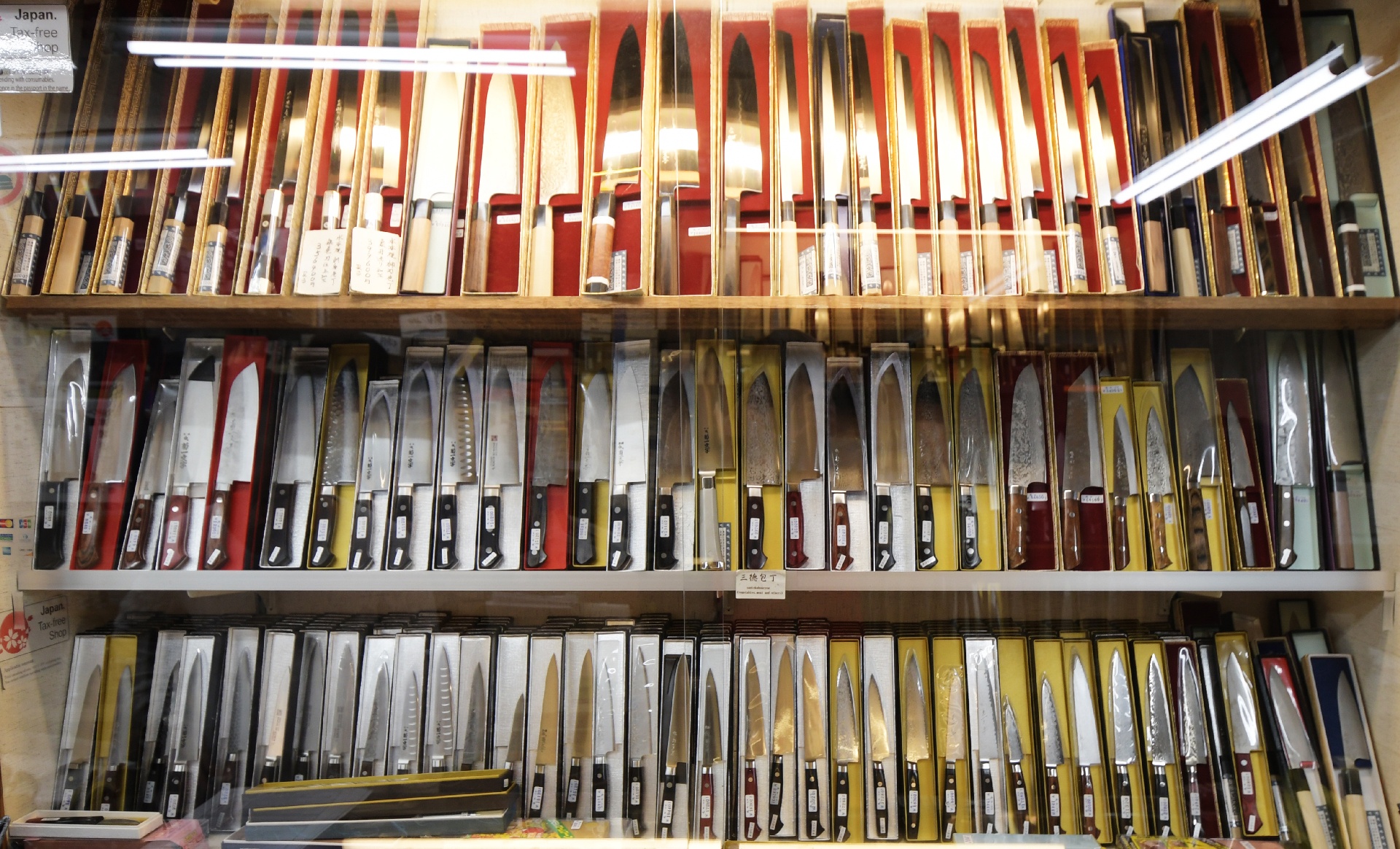
This is the largest and most varied inventory we had seen yet of hand-made kitchen and specialty knives.
Since we already had bought a regular sized kitchen knife in the Ise shop, I asked if they had a smaller knife, between a regular size and a paring knife.
Yes they did, and now so do we! Yuko picked the knife 5th from the left, on the bottom row.
Bottom row prices: from ~80$ to $400, middle row: from ~$100 to $600, and only 2 of the top row have visible prices: ~$4,000.
This is Yuko's hand-made knife from the Kyoto store. Now she will come home with a momento of Japan's older history, too!
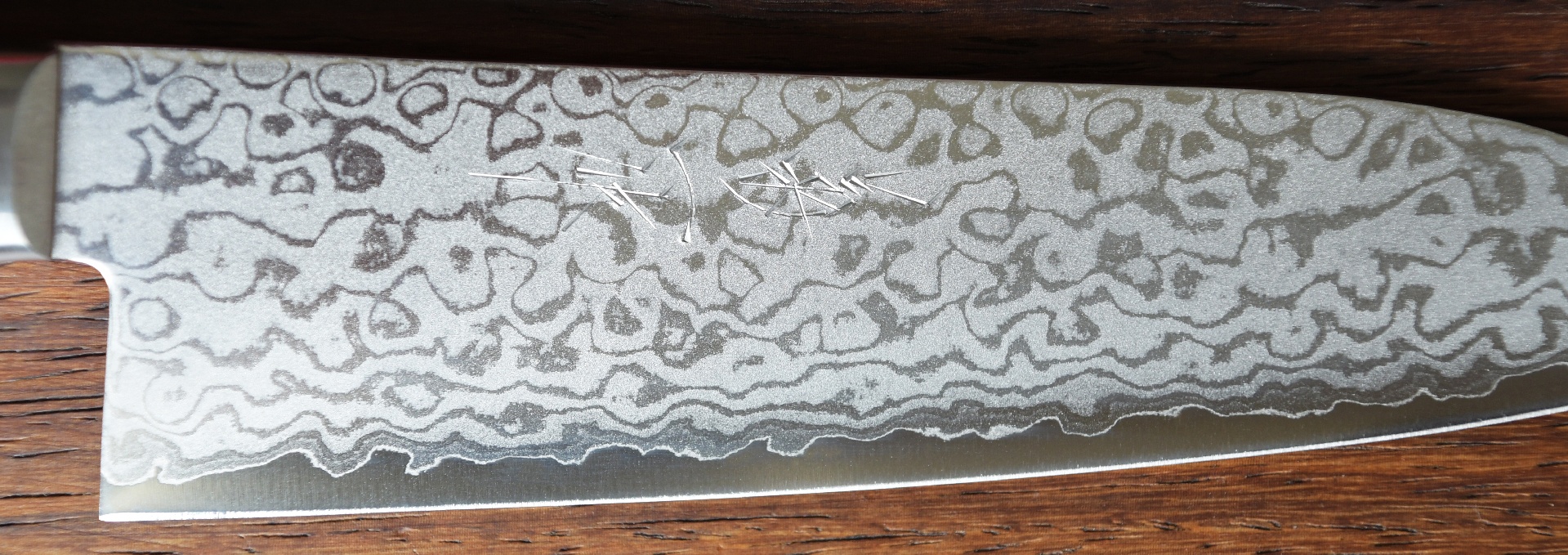
Note that the knife maker's engrave the shop's name on the hand-made blades.
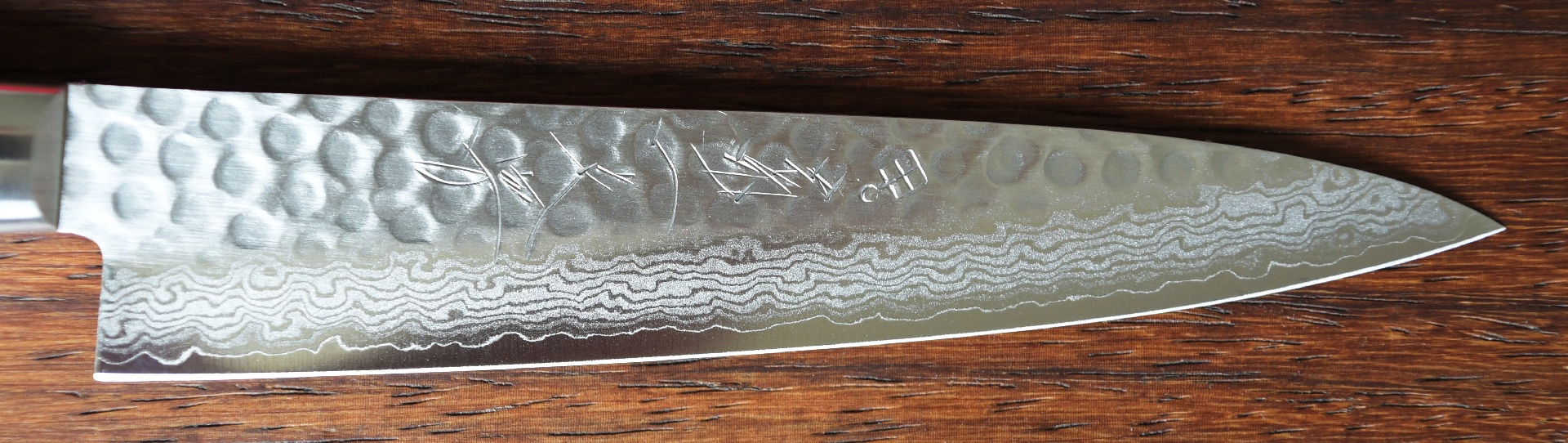
This is the Ise knife, and the shop name is also engraved. These blades were both made using the Samurai sword processes. They have been etched to show the folded steel.
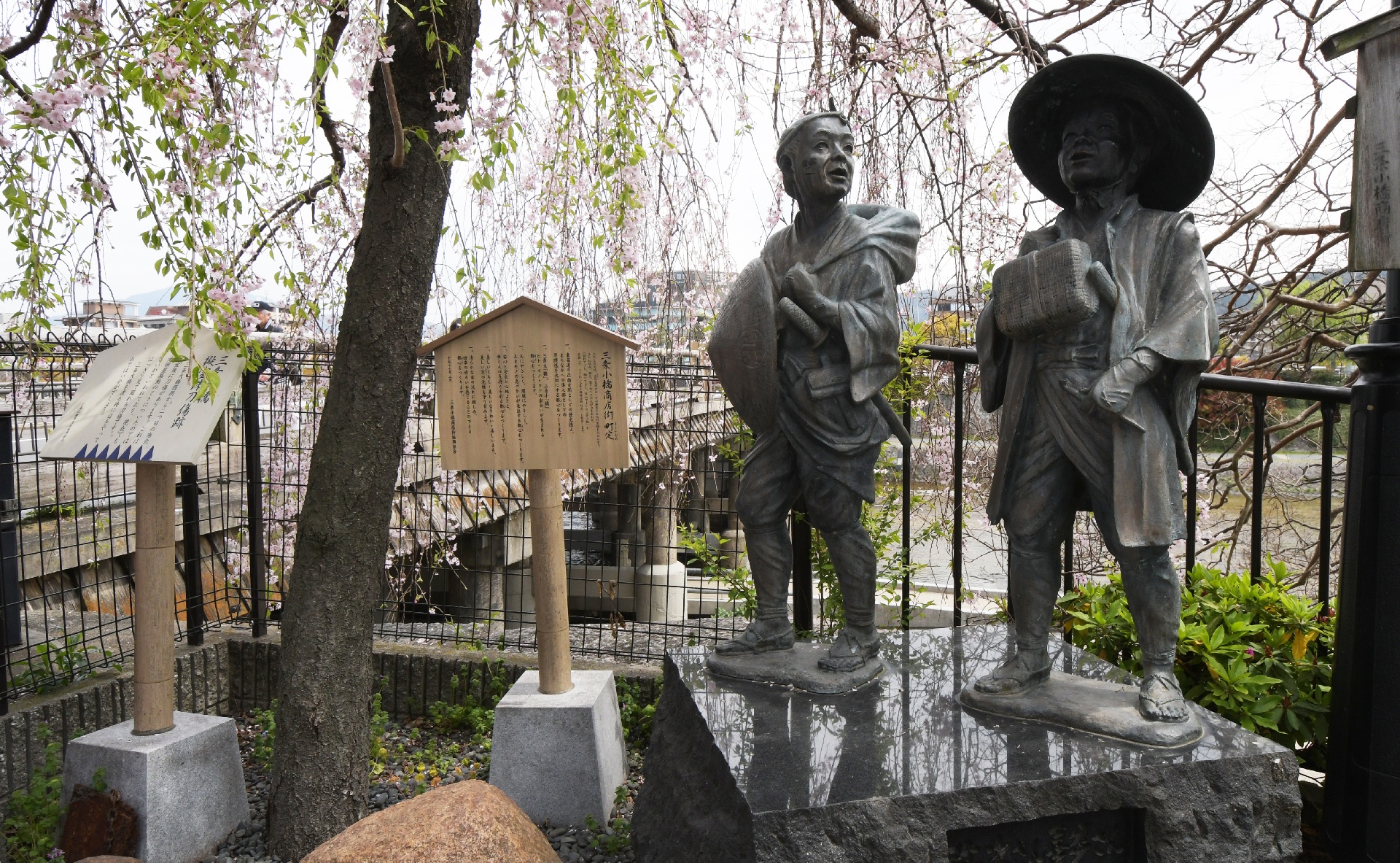
On the approach to the Kamogawa (Duck River), we found these two fellows. Yuko, I can't read the signs...
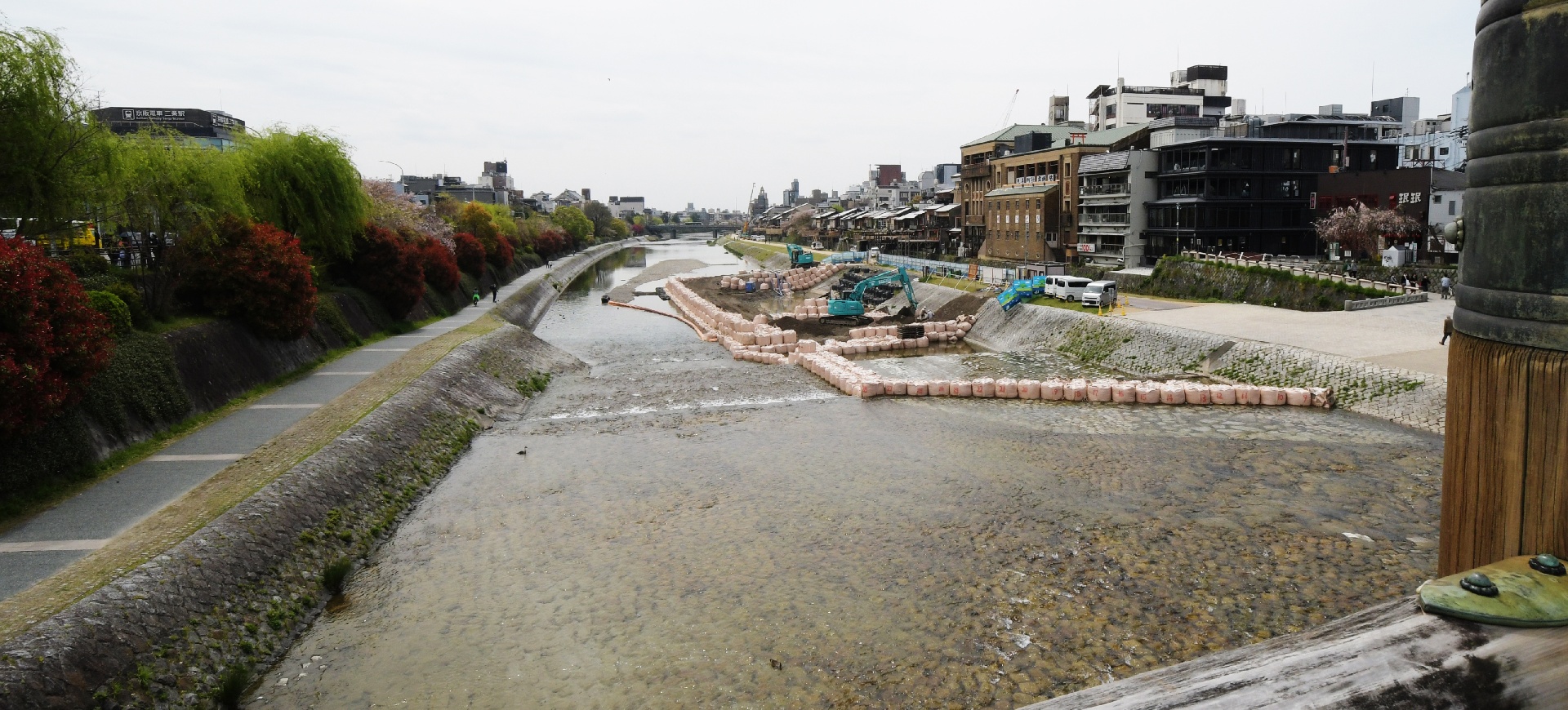
While crossing the bridge, we got a good view of the riverbank reinforcement work. This is not a deep river, for most of the time.
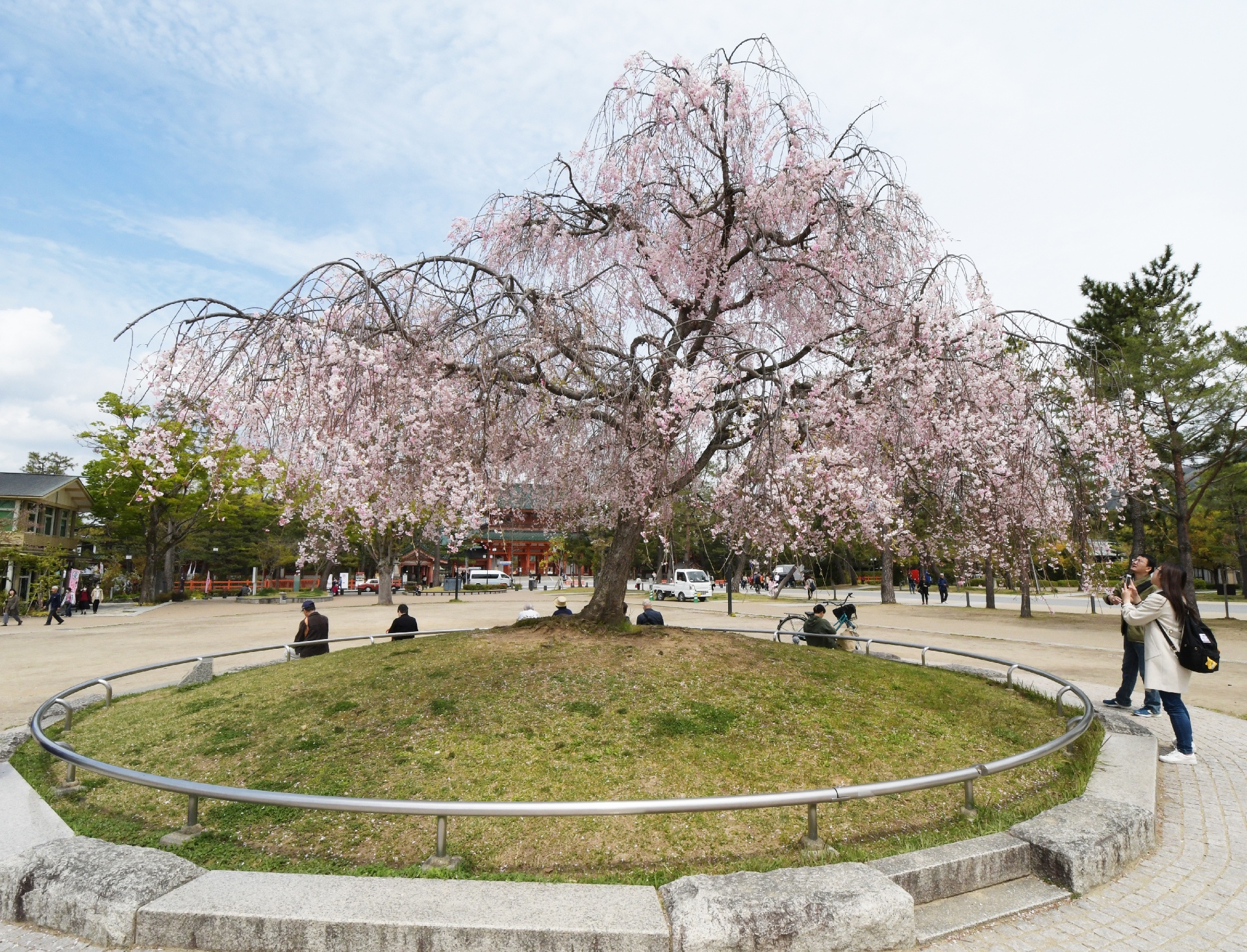
Some of the cherry trees were still giving a good show!
Back to 2019 page.